
Retatrutide Isn’t the Newest Weight-Loss Drug — Meet EloraTZP
October 1, 2026 · Martina Berger
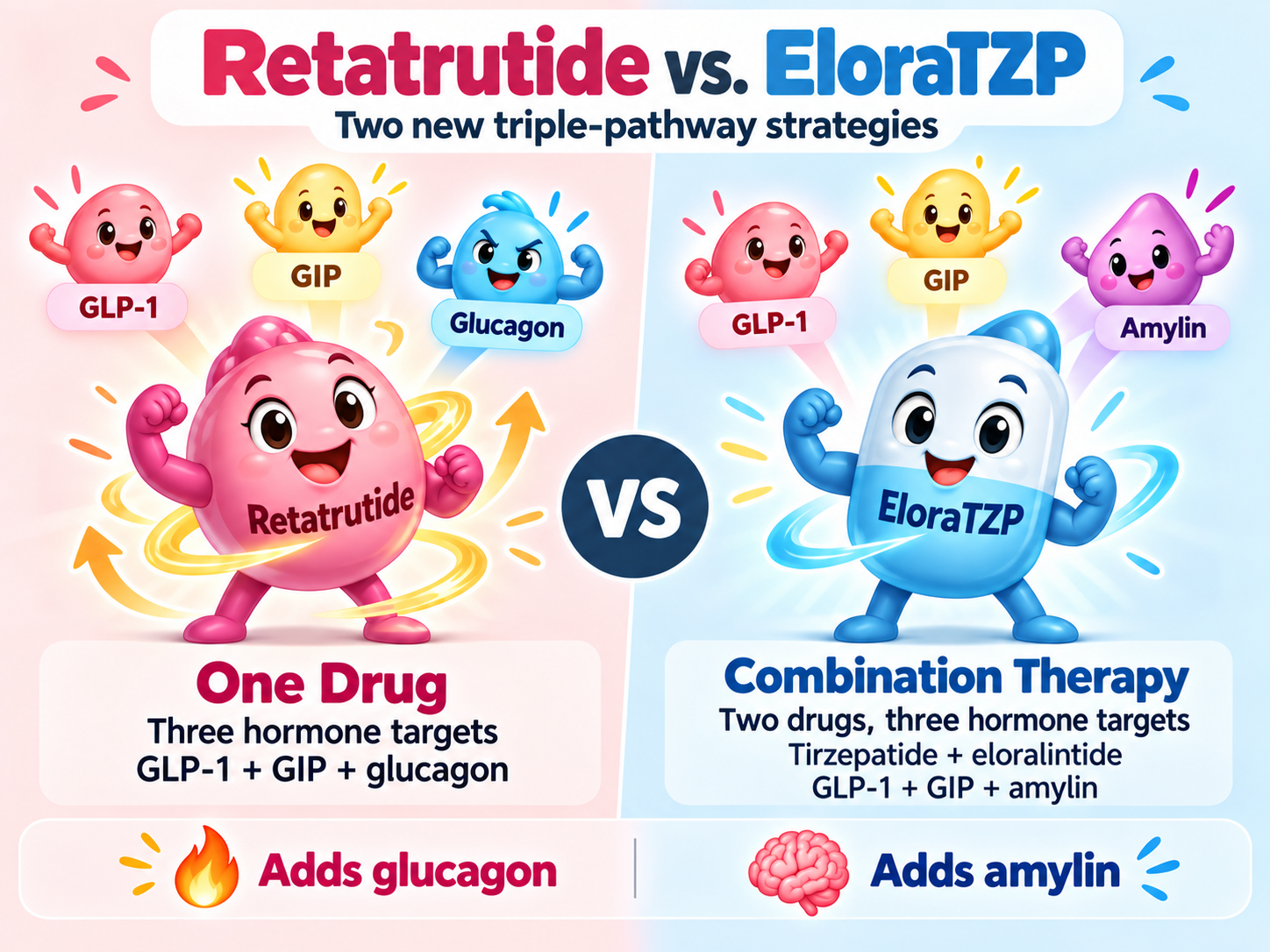
First came GLP-1. Then GLP-1 plus GIP. Now researchers are adding a third hormonal pathway.
Eli Lilly has reported new Phase 2 results for an experimental combination called EloraTZP. It pairs tirzepatide, the active ingredient in Zepbound, with eloralintide, a drug that targets the hormone amylin.
At the highest dose, the combination produced an average 23.3% weight loss over 48 weeks in adults with obesity or overweight and Type 2 diabetes. Tirzepatide (Zepbound) alone produced 14.8% in the same study.
From One Hormone to Three
Ozempic (semaglutide): GLP-1
Zepbound (tirzepatide): GLP-1 + GIP
Retatrutide: GLP-1 + GIP + glucagon
EloraTZP (tirzepatide + eloralintide): GLP-1 + GIP + amylin
What is Amylin
Amylin is a hormone that's released after we eat and helps signal fullness to the brain. By adding it to tirzepatide, Lilly is testing whether several hormonal signals can work together to reduce appetite. Retatrutide takes a different route by adding glucagon, so researchers are now exploring more than one way to go beyond Zepbound.
More Weight Loss Isn't the Whole Story
Side effects were also more common with EloraTZP. Depending on the dose, 10.8% to 27% of participants stopped treatment because of adverse effects, mostly gastrointestinal, compared with 2.9% on tirzepatide alone. Lilly plans to change the dosing strategy for Phase 3.
That matters. The most effective medication isn't the one that produces the biggest possible weight loss. It's one people can tolerate long enough to stay on.
What About Retatrutide?
Retatrutide doesn't have a brand name yet because it's still in clinical trials. Recent Phase 3 results in people with obesity or overweight and Type 2 diabetes showed average weight loss of up to 20.8% over 80 weeks.
It's tempting to compare that with EloraTZP's 23.3%, but the trials differed in duration, doses and design. What we can say is that both approaches are producing results that would have seemed remarkable a few years ago.
The Question I Find More Interesting
Having gone from Ozempic to Zepbound and now following retatrutide closely, I no longer think the key question is which drug produces the biggest number on the scale.
The better question is whether we can lose substantial fat while preserving muscle, minimizing side effects, and actually feeling healthy. More weight loss is not automatically better weight loss.
The future of obesity treatment may not be about pushing one hormone harder and harder. It may be about learning how several of the body's natural systems work together and finding the right balance between effectiveness and tolerability.
That's the part I'm watching.
EloraTZP and retatrutide remain investigational and are not FDA-approved. This article is for educational purposes and is not medical advice.