
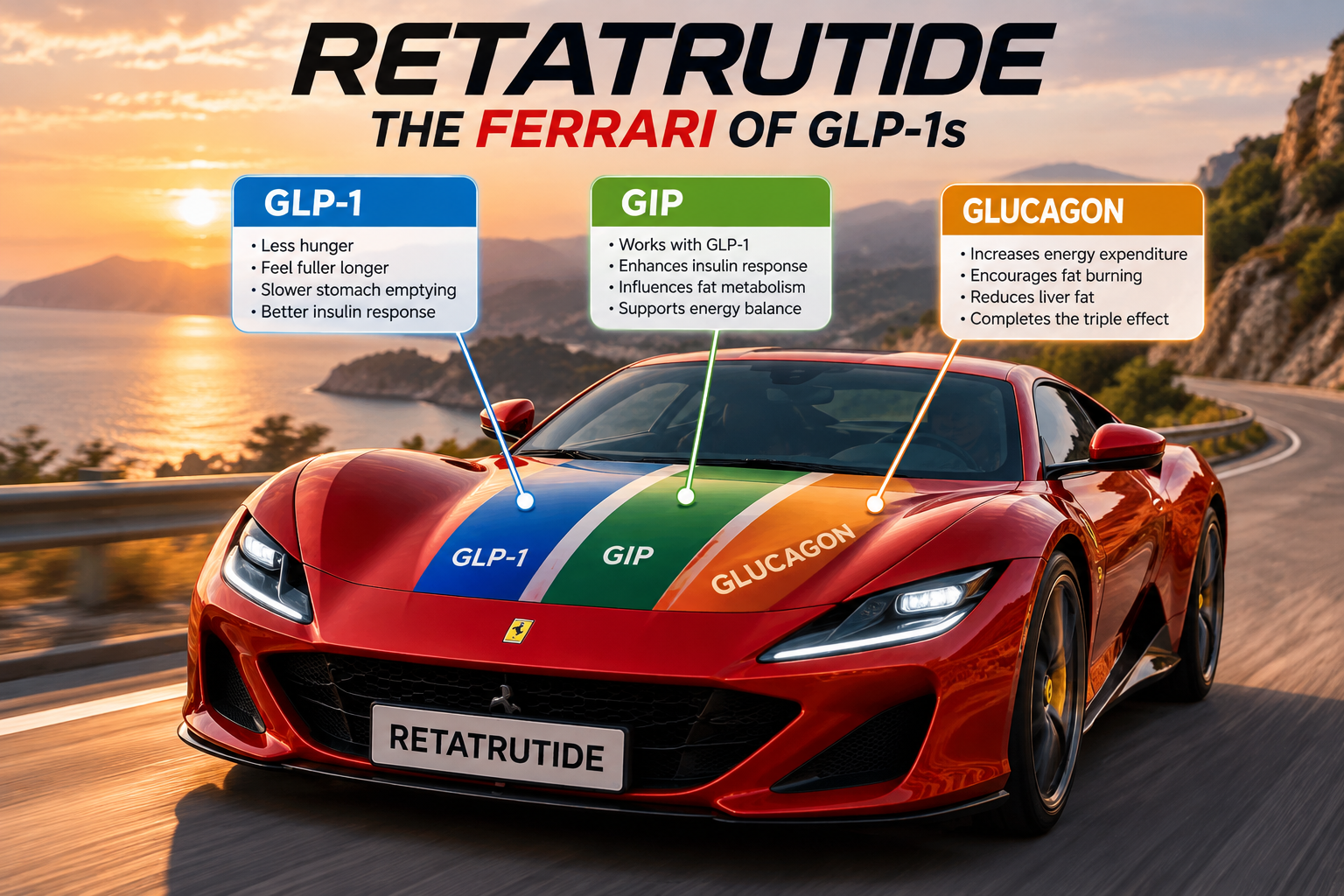
ONE DRUG, THREE TARGETS
Retatrutide is an investigational once-weekly injection being developed by Eli Lilly for obesity and related metabolic diseases.
What makes it different is that one molecule activates three hormone receptors: GLP-1, GIP, and glucagon.
Ozempic/Wegovy (semaglutide) → GLP-1
Mounjaro/Zepbound (tirzepatide) → GLP-1 + GIP
Retatrutide → GLP-1 + GIP + glucagon
That third target—the glucagon receptor—is what makes retatrutide particularly interesting.
SO WHAT DO THESE THREE SIGNALS DO?
GLP-1: EAT LESS
GLP-1 is released naturally after we eat. It helps signal fullness, slows stomach emptying, and increases insulin release when blood sugar is elevated.
In everyday terms: you may feel full sooner and stay full longer.
For me, one of the most noticeable effects has been the reduction in what many people call “food noise.” Food simply stops demanding so much attention. Instead of constantly thinking about what I’ll eat next, my brain becomes quieter around food.
GIP: WHAT HAPPENS AFTER A MEAL
GIP is another hormone released in response to food. It enhances glucose-dependent insulin secretion and plays a role in how the body handles nutrients and fat.
Researchers are still working out exactly why combining GIP and GLP-1 activity produces such powerful metabolic effects. Together, however, they influence appetite, blood sugar regulation, and energy balance.
GLUCAGON: THE INTERESTING THIRD PIECE
This is where retatrutide becomes different.
Glucagon is usually thought of as insulin’s counterpart. When blood sugar drops, glucagon tells the liver to release glucose.
So why activate the glucagon receptor in a weight-loss drug?
On its own, glucagon can raise blood sugar. But when combined with GLP-1 and GIP activity, glucagon signaling may also increase energy expenditure, promote the use of stored fat, and reduce liver fat.
The idea, therefore, isn’t simply:
EAT LESS
It is potentially:
EAT LESS + IMPROVE METABOLIC REGULATION + CHANGE HOW THE BODY USES STORED ENERGY
That combination may help explain the substantial weight reductions seen in retatrutide clinical trials.
WHAT HAVE THE TRIALS SHOWN?
The numbers reported from Lilly’s Phase III program have been striking.
TRIUMPH-4 — Obesity + knee osteoarthritis
At the 12 mg dose, participants lost an average of 28.7% of their body weight over 68 weeks—more than 70 pounds on average—along with improvements in knee pain and physical function.
TRIUMPH-1 — Obesity without diabetes
Participants achieved a mean weight loss of 28.3%.
TRIUMPH-2 — Obesity/overweight + type 2 diabetes
Average weight loss was 12.7%, 19.1%, and 20.8% with the 4 mg, 9 mg, and 12 mg doses, respectively, along with A1C reductions of up to 1.6%.
TRIUMPH-3 — Severe obesity + cardiovascular disease
Participants lost up to an average of 22.6% of their body weight at 80 weeks.
These results are impressive, but weight loss is only part of the story. Improvements in cardiovascular risk markers do not automatically mean that a medication has been proven to prevent heart attacks or strokes. Those outcomes require their own clinical evidence.
SIDE EFFECTS
Like other medications in this class, the most common side effects reported with retatrutide have been gastrointestinal, including nausea, diarrhea, vomiting, and constipation, particularly when starting treatment or increasing the dose.
Earlier trials also reported a dose-related increase in resting heart rate, which continues to be monitored as more data become available.
BUT THERE’S ANOTHER SIDE TO THIS
Making it easier to eat dramatically less creates another challenge:
THE BODY STILL NEEDS NUTRITION.
A smaller appetite doesn’t mean the body stops needing protein, essential fatty acids, vitamins, minerals, and enough total energy.
And weight loss isn’t automatically fat loss. Lean tissue, including muscle, can be lost too.
That has become an increasingly important part of my own journey.
I don’t just want to weigh less. I want to lose fat while protecting—and hopefully rebuilding—muscle.
For me, retatrutide therefore isn’t only about the number on the scale. It is also about nutrition, protein, strength training, body composition, and what actually happens to my body as the weight comes off.
READ MY RETATRUTIDE LOG →
WHERE DOES RETATRUTIDE STAND NOW?
As of September 2026, retatrutide remains investigational and is not FDA-approved for public use.
Lilly has reported positive results from multiple Phase III trials and plans to submit retatrutide for U.S. regulatory approval in 2027.
Until it is approved, Lilly states that retatrutide is available only through its clinical trials. Products sold online claiming to contain retatrutide are not Lilly’s product, and their identity, purity, dose, and safety cannot be assumed.
This website documents my personal experience and my exploration of the science. It is not medical advice or a recommendation to obtain or use an investigational drug. Talk to your doctor before starting any weight-loss medication.