James
Denial
James is based on something very human: people can support an idea with good intentions when it promises fairness, security, and a better life, only to realize later that the same system may take away freedoms they once considered normal.
James helps Christantin build his society because he believes in it. He wants a world where nobody worries about food, housing, or security, and where the gap between rich and poor disappears. To him, it initially seems like a chance to build something better.
The problem is not the desire to improve people's lives; it begins when achieving that vision requires more and more control over the people themselves.
When Equality Becomes Control
As the society develops, James begins to see what he had not considered before: if everyone is expected to live equally, someone has to decide what equality actually looks like, including how much people need, how much they may own, and how much individual ambition is acceptable.
The system stops simply making sure people have enough and begins deciding what they are allowed to want.
It made me realize how easily people can accept increasing control when they are afraid. That does not mean every restriction is wrong, but it reminded me how important it is to continue asking questions even when rules are introduced for good reasons.
Seeing the Contradiction
History has shown what can happen when ideals of equality become tied to concentrated power. Maoist China and the Soviet Union both promoted greater equality while political power became concentrated in the state and those closest to it. Under Mao, particularly during the Cultural Revolution, people who did not conform to accepted ideology could face persecution, imprisonment, or worse.
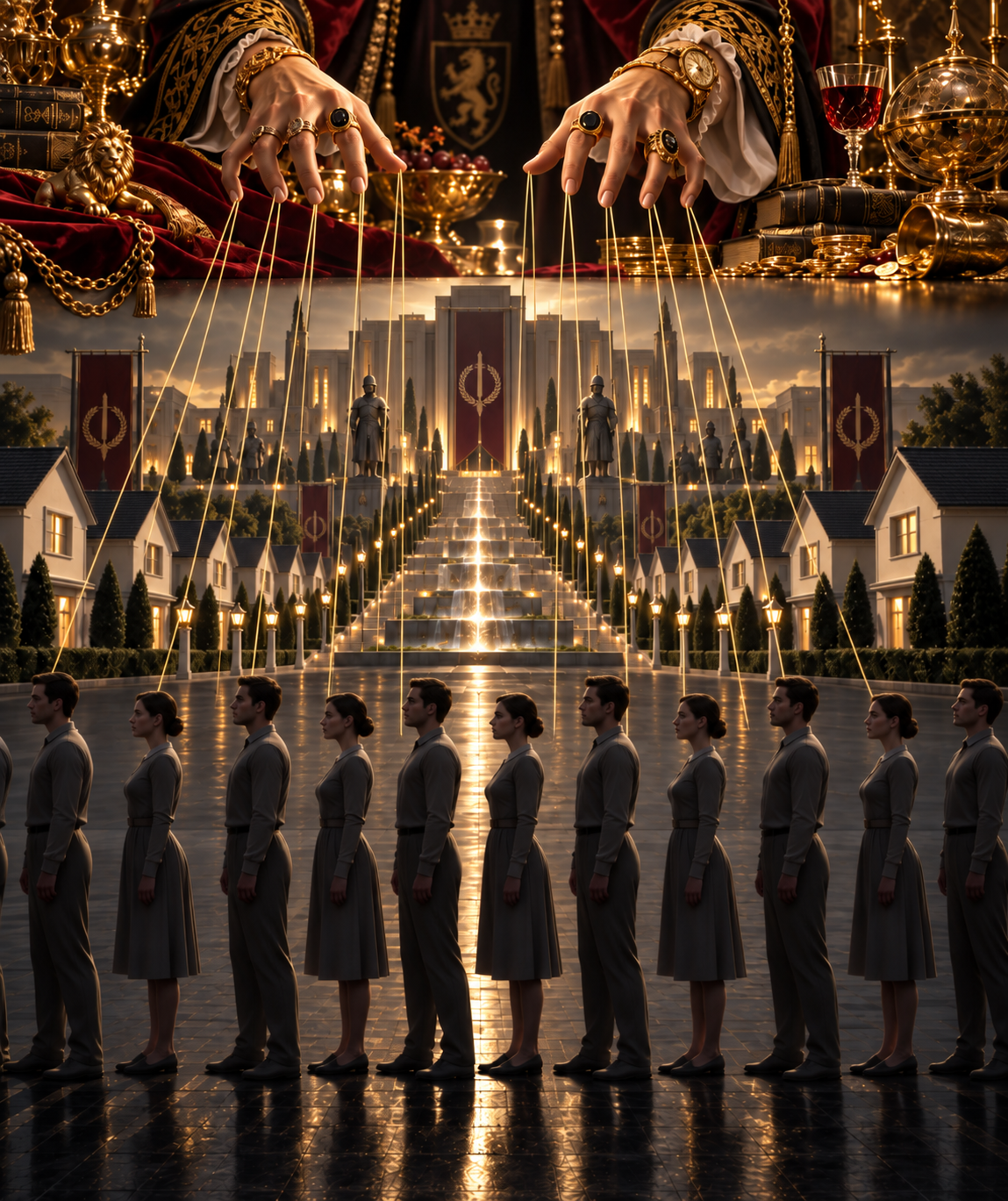
That helped inspire Christantin's regime. He and his inner circle do not live under the same limitations as everyone else; there is still an elite with greater access, influence, and freedom. The promise of eliminating inequality has simply produced another hierarchy, with Christantin at the top.
The Price of Security
James understands far more than he admits. He sees people gradually losing freedom in the name of security, but the system works very well for him. He has status, influence, and a comfortable life, which means challenging Christantin would require him to risk everything he has built.
That, too, is very human. People do not remain silent only because they agree; sometimes speaking up can cost friendships, careers, status, or security, while under truly oppressive governments it can cost freedom or even life.
James once accepted sacrifice as necessary for the greater good, but sacrifice becomes much harder to accept when he is the one expected to make it.
What James Represents
James’s story connects to questions that did not end with Mao or the Soviet Union: How much freedom should we exchange for security? How much power should we give to those who promise to solve our problems? And how much should individuality bend to the “greater good”?
These questions do not belong to one political side or ideology. The danger begins whenever people become so convinced that their vision of a better society is right that they no longer allow others to question it.
James believes he is helping to build a paradise, but by the time he begins to understand its price, walking away would cost him too much.
That leaves the question behind his character that matters most to me: What do we do when we realize that a system benefiting us is hurting someone else? What happens when we believe so strongly in the goodness of an idea that we begin making excuses for what is being done in its name? And what would finally make us, like James, say, “This is wrong”?
Paradise stops being paradise the moment people are no longer free to question it, leave it, or choose a different way to live.