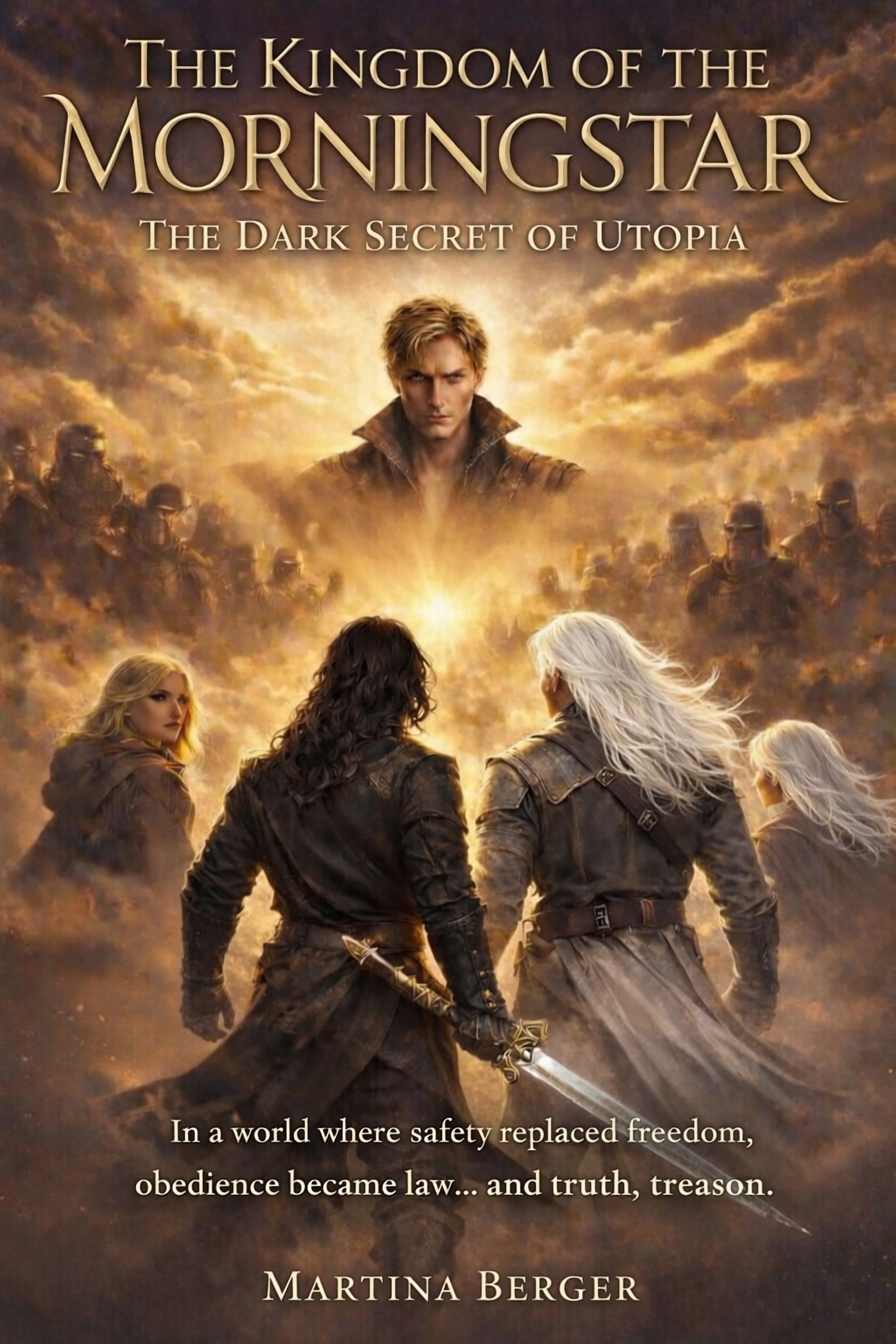
Ella
Integrity

The Courage to Admit You Were Wrong
Ella is more complicated. She is Christantin's mistress, but I never considered her an evil character — she believes him, believes he is creating a better world, and because she believes in him, she becomes deeply invested in supporting him, helping him, pleasing him. Little by little she stops questioning what she is doing, and somewhere along the way she begins to lose herself.
I think that can happen much more easily than people realize. Good people can walk down the wrong road, believe the wrong person, defend something they later realize was wrong. To me, what matters is what happens after you recognize it: do you protect your pride, pretend you never made the mistake, keep going simply because admitting you were wrong would be painful — or do you change? Ella changes, and that is why I consider her good.
Losing Yourself
Part of Ella is based on myself. Before I had children, I was first and foremost a scientist. I loved research, I loved working, and I had built a strong part of my identity around that world. Then I became a mother, and I loved being a mother. I made the decision to work only part-time because I wanted to be there for my children — it was a choice I made willingly, and I do not regret it.
But something changed in the way some people saw me. Suddenly I was no longer primarily the scientist; I was the woman who "stayed home with the kids and worked a little on the side," as though I had nothing to do. That always fascinated me, because taking care of children and a household is anything but doing nothing. You become a cook, a cleaner, a babysitter, a driver, an assistant, a tutor, a nurse, an organizer — and somehow you are expected to do all of it while making it look effortless. Yet people still sometimes speak about being a stay-at-home mother as though it isn't real work.
I think many women slowly lose pieces of themselves this way. Not because motherhood is bad, and not because caring for a family is somehow less important, but because when you spend years taking care of everyone else, it can become very easy to forget who you were before everyone needed something from you. You become someone's mother, someone's wife, someone's employee, someone's helper — and somewhere underneath all of those roles, there is still you.
The Woman Behind Ella
Ella was also inspired by a woman I once knew professionally, a supervisor and scientist I deeply admired. I even loosely based Ella's name on hers, although I removed a few letters. She was strong, intelligent, energetic, and an extraordinary researcher, and she had built her career in a scientific world once overwhelmingly dominated by men. That strength stayed with me.
So Ella became a mixture of different things for me: the intelligent woman, the loyal woman, the woman who gives too much of herself, the woman who follows the wrong person, and finally, the woman who finds herself again. Because sometimes strength isn't about never making the wrong choice — sometimes strength is being brave enough to say I was wrong, and then choosing a different path.