
How Heat Can Affect Your Weight
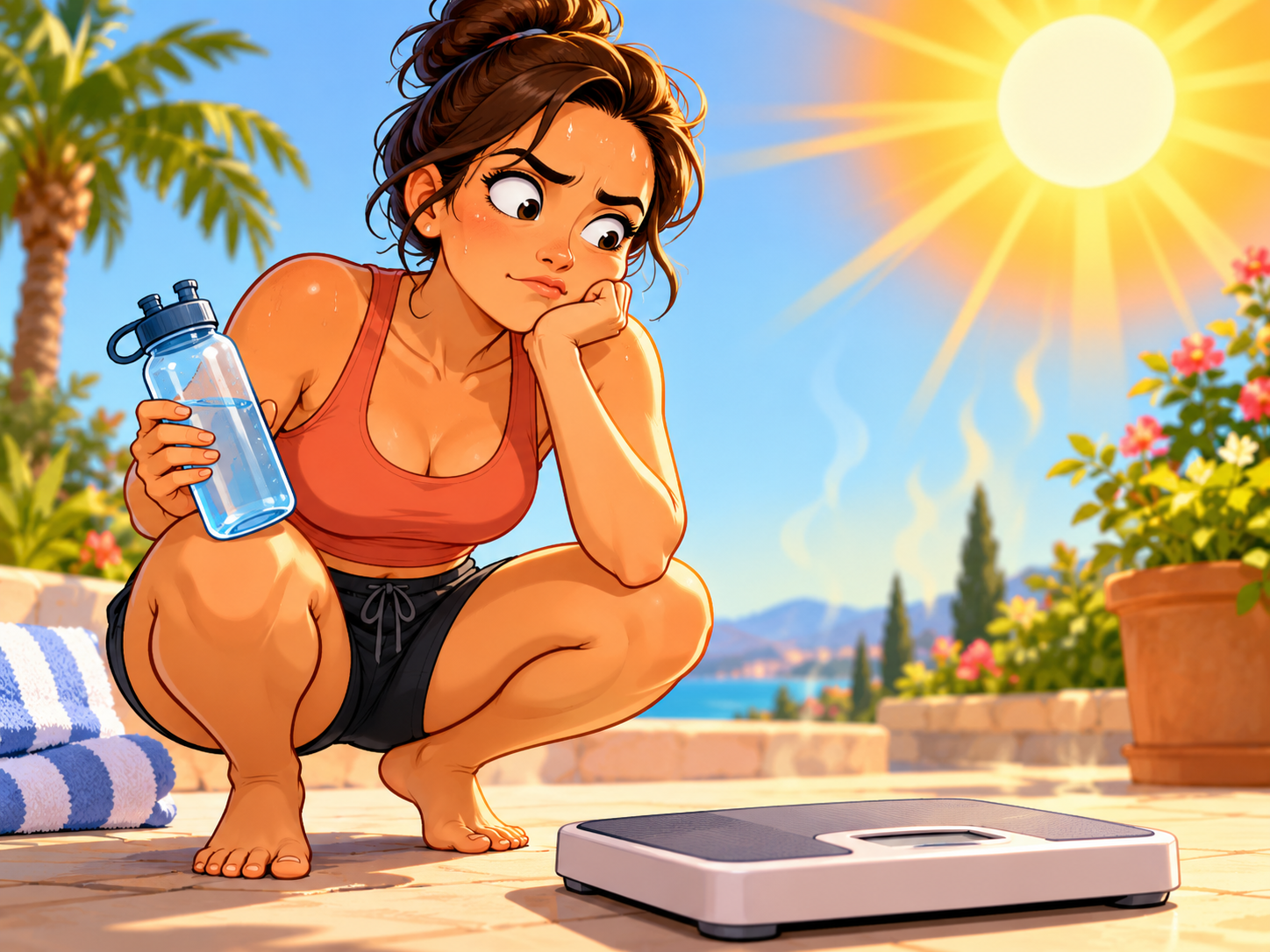
Heat, Hydration, and the Scale: Why Hot Weather Can Mess With Your Weight
Hot weather does more than make us uncomfortable. It changes how much we sweat, how much water our bodies hold, how we exercise, how hungry we feel, and even what the scale says the next morning.
That matters when you are trying to lose weight. The scale can suddenly move up or down for reasons that have very little to do with body fat. The good news is that once you understand why, you can stop letting one strange number throw off your whole week.
Why the Scale Moves in Hot Weather
Sweating can make the scale drop, temporarily
When we sweat, we lose water. That can make body weight drop quickly, especially after exercise on a hot day.
But it does not mean we suddenly lost more fat. Once we drink and replace the fluid, much of that weight comes back. So if the scale is lower after a long walk, swim, or workout in the heat, part of that change may simply be dehydration.
Heat can also make us hold onto water
This sounds contradictory, but heat can cause the opposite effect too.
When the body gets hot, blood vessels near the skin widen to release heat. More fluid can then move into the surrounding tissues. This is why some people notice swollen fingers, feet, or ankles in hot weather.
So yes, you can be sweating more and still feel puffy or see the scale go up.
Sodium, fluids, and the rebound
After sweating heavily, we often drink more and may take in more sodium or electrolytes. Replacing them can be important, but it may also change how much water the body holds for a day or two.
The scale can move in both directions. You sweat and lose water. You drink and replenish it. You eat more sodium, and your body holds onto some of that fluid. Suddenly the scale seems to have a personality of its own.
Add in food still being digested, a little muscle inflammation after a workout, and temporary swelling, and one hot day can produce a very confusing number.
None of that automatically means you gained fat. Body weight is not the same thing as body fat. The scale measures everything, but it does not tell you which part changed.
Heat is not a weight-loss strategy
Your body does use some energy to cool itself, but not enough to matter for weight loss. The bigger effects of heat are indirect. It can change how active you are, how much you drink, how much sodium you eat, how well you sleep, and how hungry or nauseated you feel.
How to Deal With the Scale When It's Hot
The answer is not to stop weighing yourself. It is to make the number more reliable and to read it more calmly.
Weigh in the same way every time. First thing in the morning, after using the bathroom, before eating or drinking, in similar clothing. This removes a lot of the day-to-day noise.
Watch the trend, not the day. Compare weekly averages, or look at the direction over two to three weeks. A real change in body fat shows up as a steady trend, not a one-day jump.
Don't weigh right after a hot workout. That number mostly reflects sweat loss and will bounce back once you rehydrate.
Expect a bump after a salty meal or a heavy-sweat day. Water retention usually settles within one to three days if you go back to your normal habits.
Use other measures too. How your clothes fit, a waist measurement every couple of weeks, your energy, and your workouts tell you things the scale can't.
Don't cut food or water to "fix" a high number. Restricting after a scary weigh-in tends to backfire, and skimping on fluids in the heat can be dangerous.
If the scale jumps, ask yourself a few quick questions. Was I out in the heat yesterday? Did I sweat a lot, eat something salty, or sleep badly? Are my hands or ankles a little swollen? If the answer is yes, the change is very likely water.
How to Eat in Hot Weather
Heat often dulls appetite, and big, heavy meals can feel awful when it's 100 degrees out. That is normal. The goal is to keep eating well without forcing down food that makes you feel worse.
Eat lighter, more often. Smaller meals and snacks spread through the day are usually easier to handle than two or three large ones. Big, rich meals make your body work harder to digest, which can leave you feeling hotter and sluggish.
Lean on water-rich foods. Watermelon, cantaloupe, berries, oranges, cucumber, tomatoes, lettuce, celery, and zucchini all add fluid along with fiber and nutrients. They count toward hydration.
Keep protein in every meal. It helps you stay full and protects muscle while you're losing weight. Cold options work well in summer: chicken salad, tuna, eggs, Greek yogurt, cottage cheese, beans, tofu, or shrimp.
Go for no-cook or low-cook meals. Big salads with protein, wraps, grain bowls, cold soups like gazpacho, and grilled food eaten outdoors keep the kitchen cooler and make healthy eating easier.
Be smart about salt, not afraid of it. If you sweat a lot, you do need to replace some sodium. Just notice that very salty restaurant meals and processed snacks are a common reason for a next-day jump on the scale.
Watch the "cool treats." Iced coffee drinks, smoothies from shops, sweet tea, lemonade, and ice cream are easy to overdo in summer and can add up fast. A homemade smoothie or frozen fruit is often a good swap.
Go easy on alcohol. It adds calories, can increase dehydration, and makes it harder for your body to handle heat.
Practice food safety. Bacteria grow faster in the heat. Don't leave perishable food out for more than an hour when it's above 90°F, and keep picnic food on ice.
If heat leaves you with almost no appetite, don't skip meals entirely. Something small and cool, like yogurt with fruit or a few crackers with cheese, still gives your body the fuel it needs.
Staying Hydrated
Drinking enough is one of the best things you can do, both for your safety and for a steadier scale. A well-hydrated body is less likely to hold onto extra water.
Drink regularly through the day. Don't wait until you're very thirsty, especially if you're outside or active.
Check your urine color. Pale yellow usually means you're doing fine. Dark yellow is a sign to drink more.
Drink before, during, and after exercise in the heat. Small amounts often work better than a lot at once.
Replace electrolytes after heavy sweating. For long or very sweaty sessions, an electrolyte drink, a salty snack, or a meal with some sodium helps your body hold onto the fluid it needs. For short, light activity, water is usually enough.
Watch sugary drinks. Sports drinks and juices can carry a lot of sugar and calories. Low-sugar electrolyte options are a better everyday choice.
Some medications, like diuretics (water pills) and certain blood pressure drugs, along with some health conditions, can affect how your body handles fluids and heat. If that applies to you, ask your doctor how much you should be drinking.
Exercising in the Heat
For me, heat makes everything feel harder. Your body is already working to cool itself, so your heart rate rises faster, your energy drops sooner, and a workout that's normally easy can feel exhausting.
That isn't laziness. It's physiology. Your body has to split its resources between cooling you down and supporting the muscles that are working.
To keep moving safely:
Go early or late. Early morning and evening are usually the coolest parts of the day.
Move it indoors or into the water. An air-conditioned gym, a mall walk, or swimming are great hot-weather options.
Lower the intensity. Slow your pace, shorten the session, or take more breaks. Staying consistent matters more than any single hard workout.
Give yourself time to adjust. Your body gets better at handling heat over one to two weeks of gradual exposure.
Dress for it. Light-colored, loose, breathable clothing and a hat help a lot.
When Heat Becomes More Than Uncomfortable
Feeling hot and miserable is one thing. Some symptoms mean your body is struggling, and they are not something to push through.
Signs of heat exhaustion: unusually heavy sweating, cool and clammy skin, headache, dizziness, nausea, muscle cramps, weakness, or feeling faint.
If you notice these, stop what you're doing. Get somewhere cooler, sip water or an electrolyte drink, loosen your clothing, and put cool, wet cloths on your skin. If you feel worse or don't improve within an hour, get medical help.
Signs of heat stroke, a medical emergency: confusion, slurred speech, fainting, a very high body temperature, hot skin, or a fast, strong pulse. Sweating may slow or stop.
If someone shows these signs, call 911 right away. Move them somewhere cooler and cool them with water or wet cloths while you wait for help.
For me, the goal isn't to prove I can tolerate the heat. It's to stay active while respecting what my body is telling me.
What Helps Me
I do better when I keep air moving with fans, use a swamp cooler (they work best in dry climates, much less so when it's humid), exercise earlier in the day, drink regularly, replace electrolytes after heavy sweating, and eat lighter, cooler meals. I also take the intensity down when the heat is winning.
And perhaps most importantly, I try not to panic over one strange number on the scale. I look at the trend, ask myself what happened the day before, and keep going.
Because sometimes a pound is fat.
Sometimes it is water.
And sometimes it is simply August.