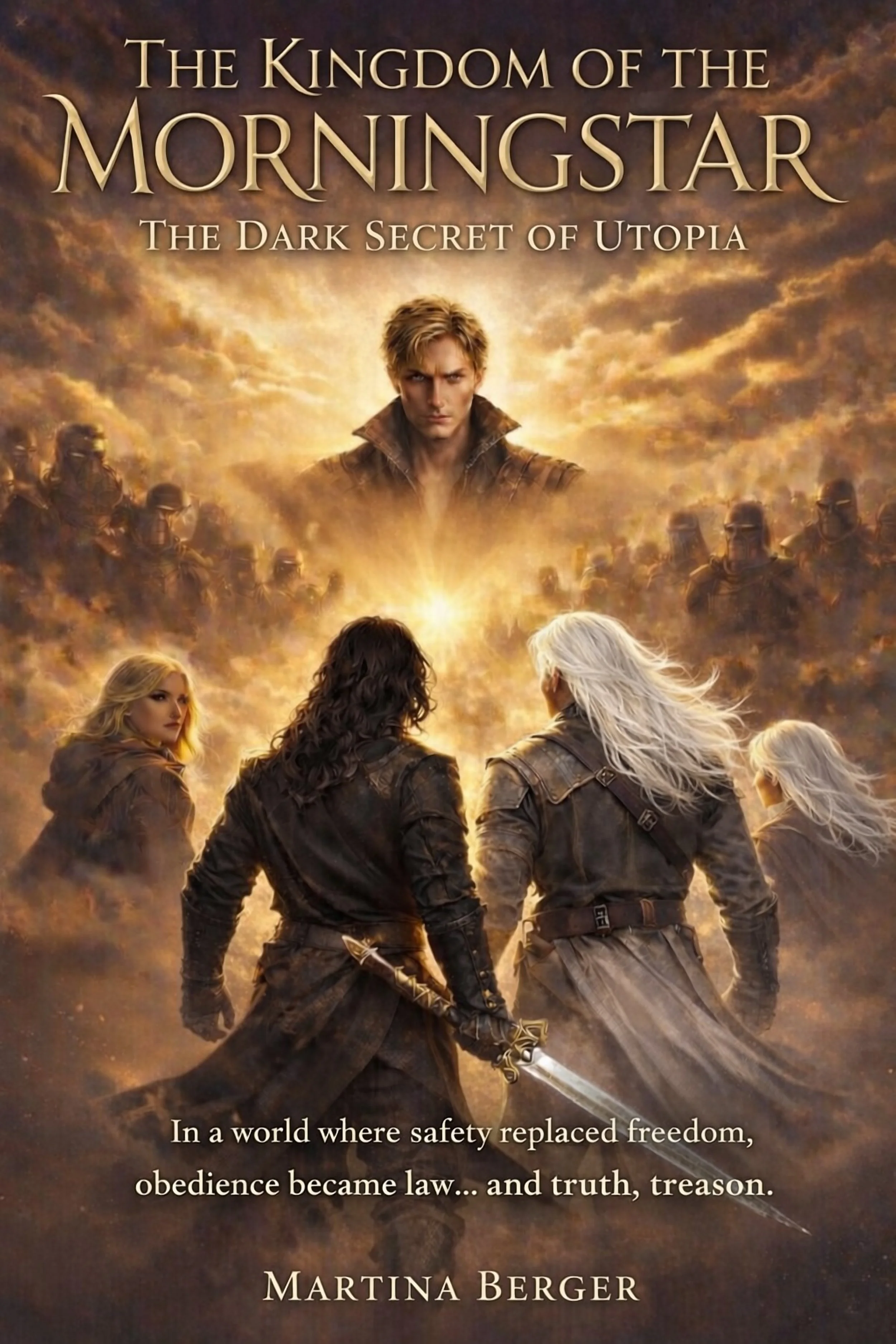
The Birth of The Kingdom of the Morningstar
The Emotions Behind the Story
What do you do when the world suddenly becomes smaller? When governments show how much power they have to restrict ordinary life — and people accept it because they are afraid and trust what they are being told?
During COVID, it sometimes felt almost surreal: much of the world was confined to homes, schools closed, businesses shut down, and ordinary life stopped. We were afraid of a virus we were still trying to understand.
Like everyone else, my life changed almost overnight. My kids were home attending school online. I watched far too much television. I watched the news. And I watched people.
I'm a scientist with a PhD in biology, and I'd worked in infectious-disease research, so COVID fascinated me scientifically. Part of me wanted to be in the lab. But I had children at home, and I stayed with them.
And then there was all that time.
WHEN QUESTIONS BECAME THE PROBLEM
As the months went by, I became increasingly disturbed by what I saw happening around me. People grew frightened, angry, and divided. Crime went up. Conversations became battles. People with different opinion no longer meant simple disagreeing - it increasingly meant being treated as the enemy.
To me, discussion is essential. Different opinions can lead to new ideas. Hearing an argument you disagree with can make you reconsider your own. That is especially important in science.
The origin of COVID was only one example. At the time, even raising the possibility that the virus might have originated in a laboratory in Wuhan could turn a conversation hostile.
And that was the part that stayed with me.
As a scientist, questioning is fundamental. You form a hypothesis. You challenge it. You gather evidence. You change your mind when the evidence changes. Sometimes what seemed certain yesterday looks very different tomorrow.
That isn't a failure of science.
That is science.
And it wasn't only COVID's origin. The same pattern appeared around masks, lockdowns, vaccines, school closures, elections, politics, and countless other subjects. Different questions, but often the same reaction: certainty without curiosity and hostility instead of discussion.
I had the feeling that everything around us was becoming more restrictive, and that we were slowly losing the freedom to express ourselves. It seemed as though we were expected to agree with the majority, and anything outside that consensus was no longer acceptable.
THE SOCIAL MEDIA EFFECT
That is where the emotions behind this book came from: fear, anger, helplessness, distrust, and frustration, all building until I finally started writing.
At first, it was not a novel at all, but an emotional log—more than a hundred pages filled with everything I was thinking, questioning, observing, and feeling during that time.
Then someone said something to me that changed the direction of everything: “In fantasy, you can do anything. You can punish the villain, make your heroes as brave as you want them to be, and create the ending yourself.”
That idea fascinated me because it gave me a way to take everything I had been struggling with—the fear, the betrayal, the uncertainty, the political tension, COVID, the distrust, and the strange world I felt I was watching unfold—and transform those emotions into an entirely different world instead of writing about them directly.
That is how The Kingdom of the Morningstar was born.
The characters are not portraits of real people, but representations of behaviors, emotions, weaknesses, strengths, and choices that I observed in the world around me and, at times, within myself.
Some of those characters became heroes, some became villains, and some became a little of both, because real people are rarely completely good or completely evil, and the choices they make can move them from one side to the other.
Social media made it worse.
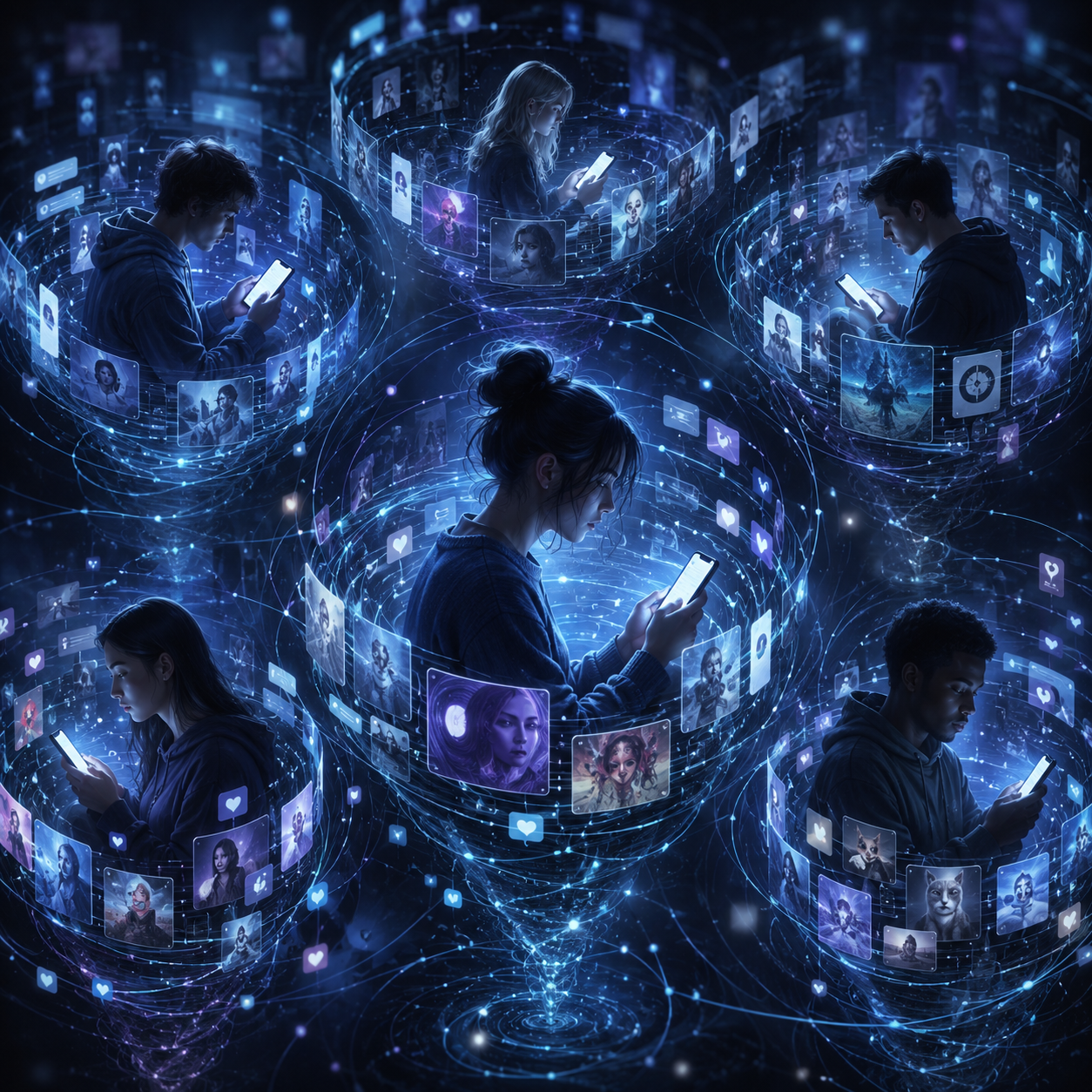
People sometimes forget that a social-media feed is not a history lesson, a scientific review, or a complete picture of reality. Algorithms learn what keeps us clicking, watching, and reacting — and then give us more of it.
The more you engage with one point of view, the more of that point of view you see. Eventually, it can begin to feel as though everyone agrees with you.
Meanwhile, someone with a completely different feed can feel exactly the same certainty from the opposite side.
Both people can believe they understand the whole story while each is seeing only a carefully selected slice of it.
There is nothing more dangerous than people who are convinced they know the truth, while their views are being shaped and manipulated by social-media clips designed specifically to keep them engaged, even if what they are being shown is wrong. Like gambling, social media is built to keep you coming back, feeding you more of what captures your attention and reinforces what you already believe.
HOW THE STORY BECAME FANTASY