The Crime Lords
Lawlessness
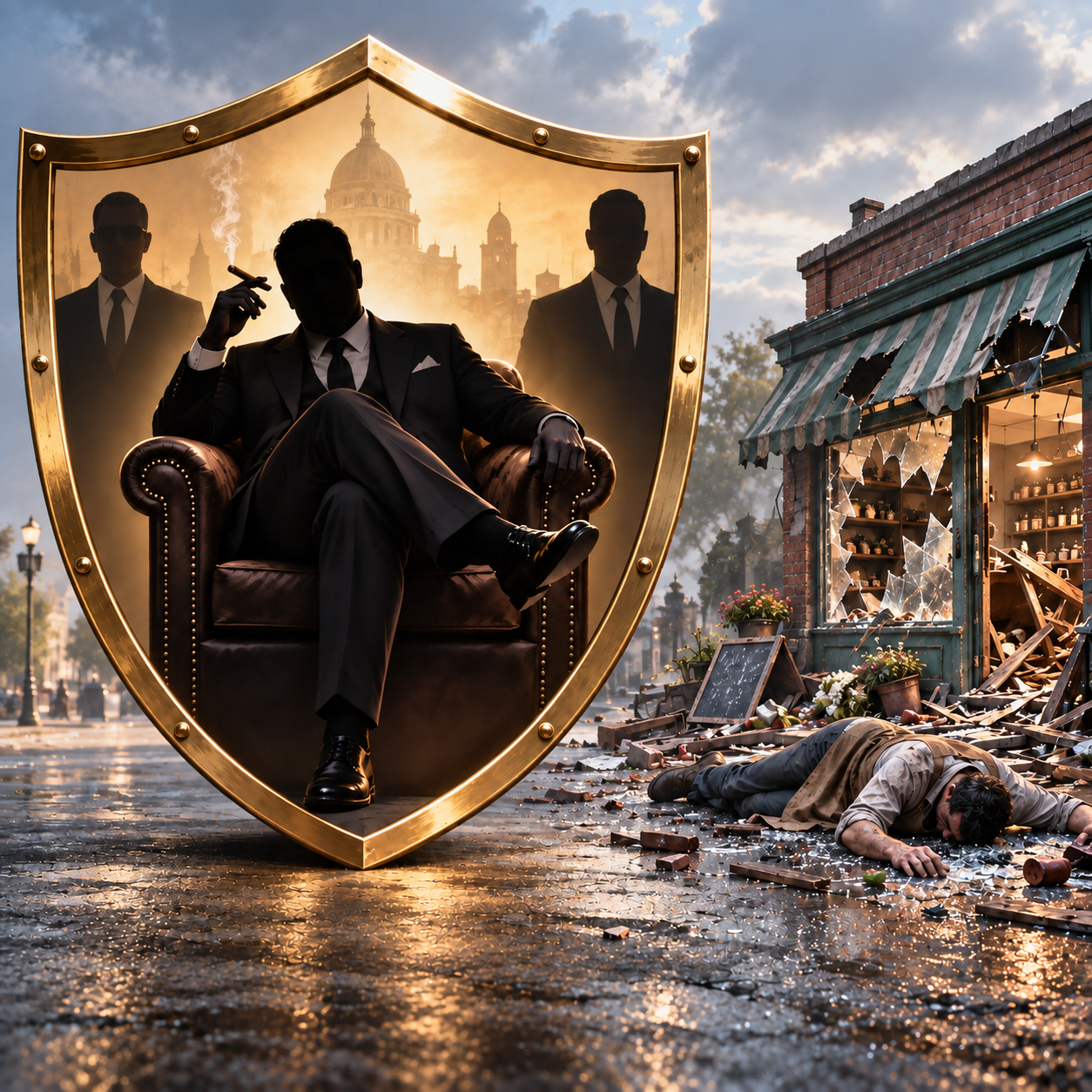
When Victims Disappear from the Story
The crime lords grew partly from another COVID experience: the feeling that victims no longer seemed to count, they were pushed into the shadows.
I understand the importance of asking why people commit crimes. Poverty, desperation, addiction, anger, and social circumstances can all influence human behavior, and understanding those factors can help us address the causes of crime. But understanding why someone commits a crime should never require us to forget the person who suffered because of it.
When the Victim Becomes Invisible
During COVID, I watched reports of grab-and-go thefts, riots, vandalism, and businesses being damaged or destroyed. What troubled me was not only the crime itself, but also the sense that destructive behavior could always find an excuse. Sometimes the conversation shifted so quickly toward explaining the offender's circumstances that the people who had actually been harmed almost disappeared from the story.
Imagine something terrible happening to you, and then watching everyone become more concerned with understanding the person who hurt you than with what happened to you.
A Business Is More Than a Building
A small business, for example, is not simply a building full of merchandise that insurance can replace. It may represent years of savings, countless hours of work, a mortgage still being paid off, employees who depend on it for their income, and a past someone spent decades building. When that is destroyed, the damage reaches far beyond a broken window or stolen inventory.
At the same time, I don't believe compassion and accountability have to be opposites. We can try to understand why someone went down a destructive path while still recognizing that the person they harmed deserves compassion, protection, and justice too. Explaining behavior should never become the same thing as excusing it.
Who Protects the People?
Another thing I found hard to reconcile during that period was the call to defund the police at a time when many people were already frightened by crime and public disorder. To me, reducing the very system meant to protect people while those fears were increasing felt almost impossible to make sense of.
When Criminals Become the Elite
That is how the crime lords emerged in the book. The elite ruling class is not made up only of politicians or powerful families; part of it consists of crime lords who moved from the shadows into positions of authority, until people who once lived outside the law suddenly found themselves helping decide what the law should be.
And perhaps that idea is not as far-fetched as it first sounds. History has given us organized-crime networks powerful enough to influence neighborhoods, businesses, public officials, and sometimes entire cities. The Mafia and the power once held by certain crime bosses show how criminal organizations can grow far beyond ordinary street crime when money, loyalty, fear, and political influence begin to connect.
For me, that was the darkest extension of the fear: not simply that crime could increase, but that the line between those meant to protect society and those who profited from harming it could begin to disappear.
The Fear Behind the Crime Lords
The crime lords came from that fear—the fear of a society in which criminals become the center of the story while ordinary people are left wondering whether their safety, their work, and their suffering still matter.
And beneath all of it is a very simple question I asked myself:
If something happens to me, will anyone protect me and seek justice for me, or will everyone be so focused on understanding the person who hurt me that I disappear from the story?